
Types of Tennis Grips Explained: Find the Right Grip for Your Game
- Playtennis.ie

- May 11
- 3 min read
Choosing the correct tennis grip can completely change the way you play. Whether you’re learning the basics, improving your topspin, or developing a stronger serve, understanding the different tennis grips is essential for better control, spin, comfort, and power.
At PlayTennis.ie, we regularly help beginner and intermediate players across Dublin and Ireland improve their technique by adjusting simple fundamentals like grip position.
Below, we explain the main types of tennis grips, what they’re used for, and which players benefit from each style.
What Is a Tennis Grip?
A tennis grip refers to how you hold the racket handle. Different grips change the angle of the racket face, which affects:
Power
Spin
Ball height
Control
Comfort
Shot style
Modern tennis players often use different grips for forehands, backhands, serves, volleys, and slices.
The Main Types of Tennis Grips
1. Continental Grip (“The Chopper Grip”)
The Continental grip is one of the most versatile grips in tennis.
Players commonly use it for:
Serves
Volleys
Slice shots
Overheads
Defensive shots
With this grip, the racket feels natural for touch shots and allows players to react quickly at the net.
Advantages
Excellent for volleys and serving
Easy transitions between shots
Great for slice and touch play
Ideal for doubles tennis
Disadvantages
Difficult to generate heavy topspin on forehands
Less suited to modern baseline tennis
Best For
Beginners learning volleys and serves
Doubles players
All-court players


2. Eastern Forehand Grip
The Eastern forehand grip is often called the “classic” forehand grip.
It allows players to hit through the ball comfortably while still generating moderate topspin.
Advantages
Natural and comfortable
Good balance of power and control
Easier for beginners to learn
Effective on faster courts
Disadvantages
Less topspin than more modern grips
Harder to handle very high balls
Best For
Beginner and intermediate players
Traditional attacking players
Players transitioning from beginner level
3. Semi-Western Grip
The Semi-Western grip is the most common modern forehand grip used in professional tennis today.
It helps players create heavy topspin while still maintaining strong power.
Advantages
Generates excellent topspin
Great for aggressive baseline rallies
Handles high bouncing balls well
Suitable for clay and hard courts
Disadvantages
Can be difficult for beginners
Lower balls are harder to manage
Requires good timing and footwork
Best For
Intermediate and advanced players
Baseline players
Modern topspin-heavy tennis

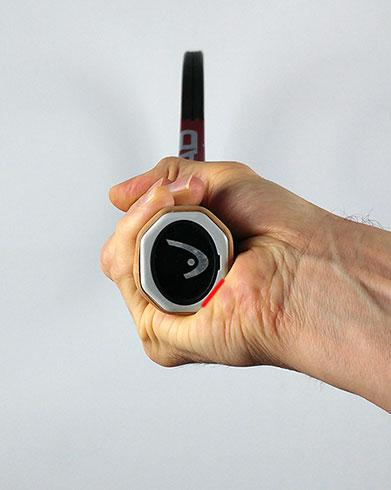

4. Western Grip
The Western grip is an extreme topspin grip often used on slower surfaces like clay courts.
It positions the hand further underneath the racket handle, creating a very closed racket face.
Advantages
Maximum topspin potential
Excellent for high bouncing balls
Helps create heavy kicking shots
Disadvantages
Difficult for beginners
Tough on low balls
Can place extra stress on the wrist
Best For
Advanced baseline players
Clay court specialists
Players who rely heavily on topspin
Tennis Backhand Grips
One-Handed Backhand Grip
Most one-handed backhand players use an Eastern Backhand grip.
This grip supports:
Slice shots
Spin
Elegant shot-making
Net transitions
Best Known For
Variety and touch
Stylish all-court tennis
Two-Handed Backhand Grip
Most modern players use:
Dominant hand in Continental grip
Non-dominant hand in Semi-Western grip
This combination creates:
Stability
Power
Control
Easier returns of serve

Which Tennis Grip Should Beginners Use?
For most beginners in Ireland and the UK, we recommend:
Forehand
Eastern or Semi-Western Grip
Serve & Volleys
Continental Grip
Backhand
Two-handed backhand using Continental + Semi-Western combination
These grips provide a strong technical foundation while allowing players to develop spin, control, and consistency over time.
How to Check Your Tennis Grip Size
Using the correct grip size is just as important as grip style.
A grip that is too small may cause:
Wrist pain
Tennis elbow
Lack of control
A grip that is too large can reduce racket feel and make spin harder to generate.
Quick Tip
When holding the racket, you should be able to fit the index finger of your opposite hand comfortably between your fingers and palm.
For a full sizing guide, check out our Tennis Grip Size Guide on PlayTennis.ie.
Final Thoughts
The right tennis grip depends on your:
Skill level
Playing style
Preferred court surface
Physical comfort
Tactical approach
At PlayTennis.ie, we help players across Dublin and Ireland improve their grips, technique, footwork, and matchplay through:
Adult tennis lessons
Beginner courses
Improver coaching
Cardio Tennis
Junior coaching
Match practice sessions
Small grip changes can make a massive difference to your confidence and consistency on court.
If you’d like help improving your technique, contact us through PlayTennis.ie and join one of our coaching programmes in South Dublin.

Comments